
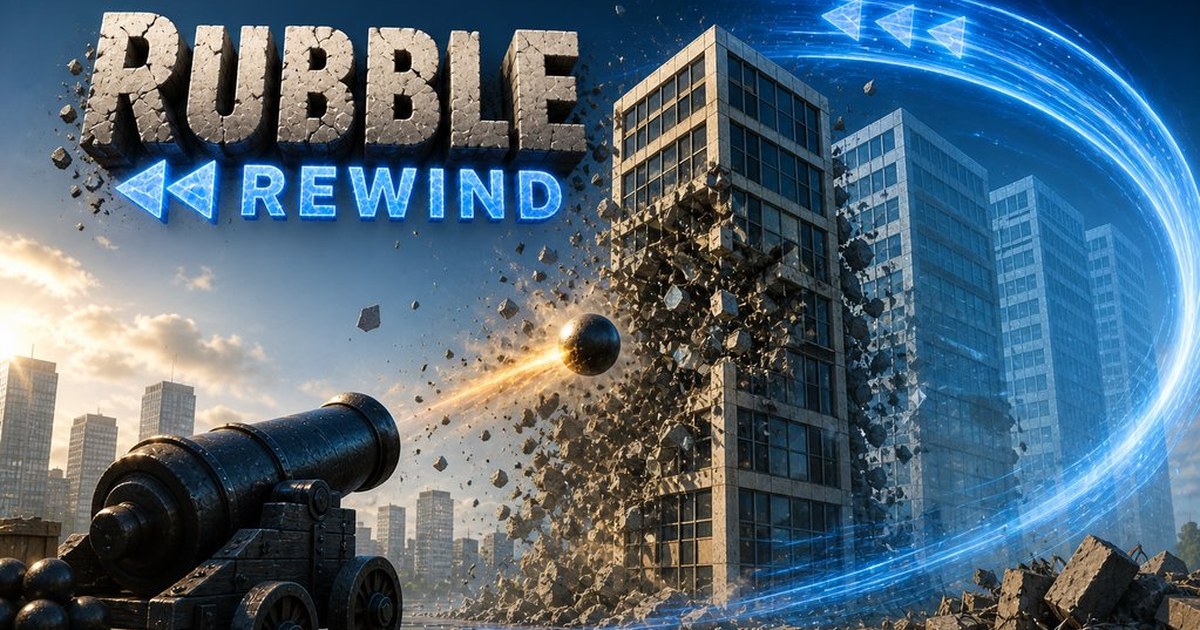
Rubble was almost done. Almost.
The system holds up under a beating now. Hundreds of chunks per cascade, staggered tick caps, dust that settles on real geometry, pitched audio per impact mass, instant regenerate when you want the wall back. Tuning loop tight enough I can stay in it for an hour without rage.
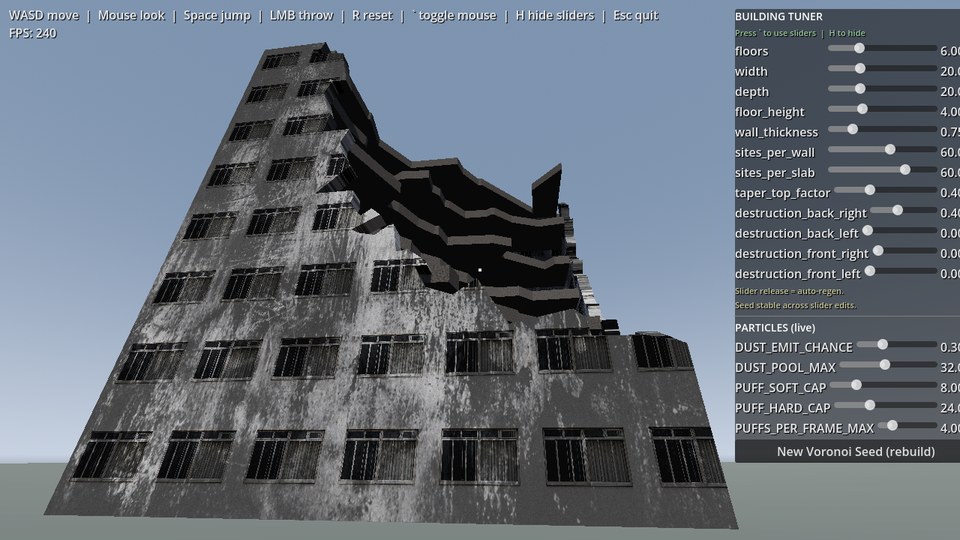
Almost. The flicker on regenerate stayed annoying. Hit R, the wall blinks back into shape, and for a single frame your eye registers the seam between collapsed and intact. Players notice. I notice. Worse: I noticed.
So I did the thing you do when you have AI in the loop. I asked: what if every chunk could rewind its own timeline? Pull the pile back up the way it came down. Hide the seam under motion.
The answer was a wall of “no, but.”
On state:
By second 8 the rubble pile is literally gone from the scene tree. You’d need to either defer the fade until rewind expires, or record snapshots and resurrect freed chunks. The first leaks memory and tanks perf on long sessions; the second means a dedicated state buffer.
On physics:
Physics aren’t reversible. Godot’s integrator (Jolt or default) is forward-only. You can’t “play physics backward”. You have to interpolate between recorded snapshots. That means the rewind looks floaty and won’t honor collisions you didn’t record. Chunks will clip through each other on the way back up.
On audio:
Impact SFX already played. Reverse playback or silent rewind? Both are jarring.
On the actual problem:
The “instant” in instant refresh is load-bearing, not lazy.
Translation: the engineering tax is real, the result will not be physics-correct, and the original feature was already doing its job. The verdict was a polite “you’re solving a problem that doesn’t exist.”
I said do it anyway.
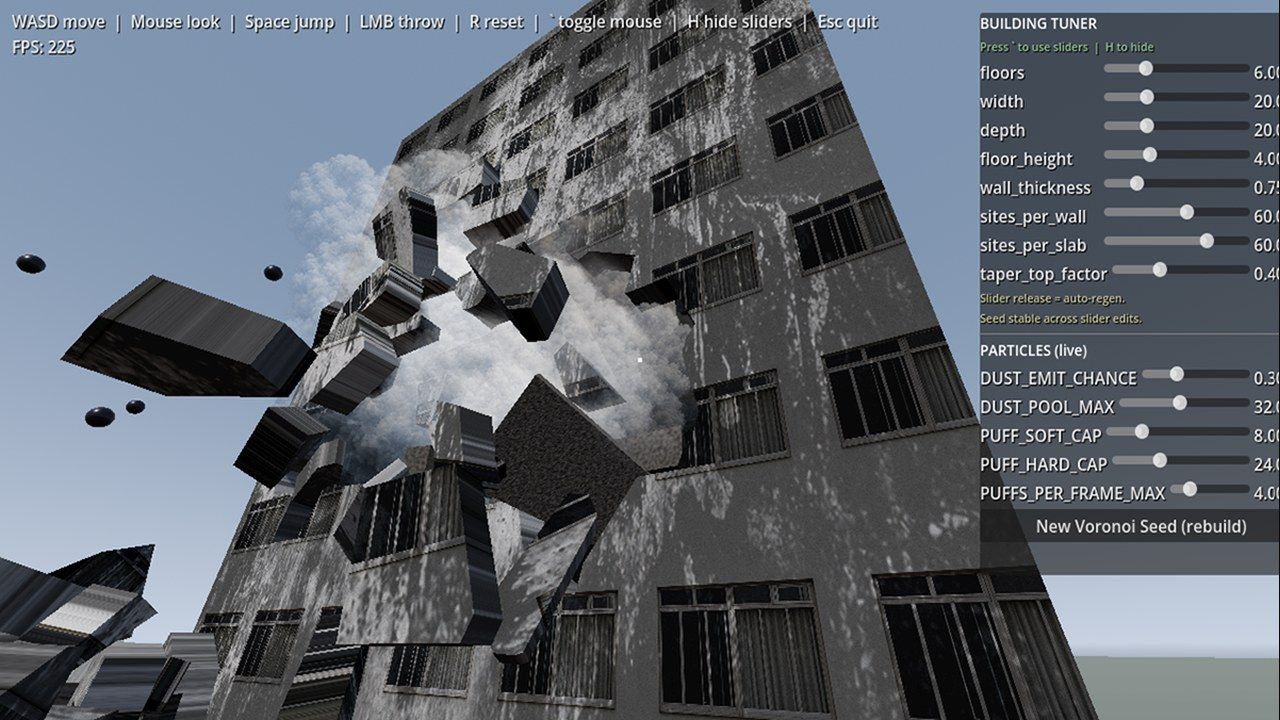
And here it is. RubbleRewind. The rewind isn’t physics-correct. It is interpolated playback over a snapshot ring buffer, exactly the floaty thing the AI warned about. Doesn’t matter. The point was never simulation purity. The point was the seam.
The rest is parameters. Snapshot rate, buffer length, rewind duration, easing curve, chunk count, cascade cap, dust density, audio reverse mode. Crank everything to max and an i7 with an RTX starts begging. Maybe this is the new Crysis. “Can it run RubbleRewind.” Untested marketing claim, free of charge.
I am not building this further. The “what if” got answered. Yes, you can push the AI past its first verdict. Yes, the result ships. No, it is not the right call for the actual game. RubbleRewind stays where it is. A playground that happens to be downloadable.
If the gameplay is good, the prompts don’t matter. If the gameplay is a tech demo with sliders, the gameplay is fine.
Build link is on the Released page. Bring a chassis you don’t mind heating.