So where does this story actually start?
Probably somewhere between a global pandemic and people paying real money for JPEGs.
The first time I noticed AI getting serious was the DALL-E era. COVID had just hit, the world was on its back, and NFT people were busy pumping JPEG monkeys to the price of actual houses. The images were still surreal weird. Cool to look at, useless for anything else.

Then things escalated.
Stable Diffusion. MidJourney. Suddenly the images were not just weird, they were coherent. Usable, even. I tried them all and ended up living inside SD 1.5. Generated a lot of "content" that I have since deleted with surgical precision.
We will not be reopening that archive.
Around that time, Runway showed up. Image to video. It was janky, warping everywhere, characters moving like their skeleton rig was being actively sabotaged, but the proof of concept was there.
What hooked me was not the quality. It was the velocity.
This thing was improving fast. Uncomfortably fast. From abstract noise to outputs that started to understand physics. Cloth moved like cloth. Hair caught wind like it was actually catching wind. AI was starting to grasp the one thing it used to completely fail at: context.
That was the first real signal.
Around 2023, a mainstream chatbot landed on my radar.
At the time, I was working at Agate in Bandung. My boss was one of the most AI aware people I have worked with. He pushed AI RnD across the team. Non artists got premium subscriptions. Artists were told to go deep into generative tools.
So I went deeper into Stable Diffusion. Model after model, LoRA after LoRA, workflow after workflow. It worked, but barely. Fingers still came in sets of six. Limbs duplicated like a low budget cloning experiment. If I wanted decent results, I either risked cooking my PC or rented a GPU server.

Nothing about it felt production ready.
The chatbot itself? At that point, I used it for emails, reports, translations. Useful, but not exactly impressive.
Then reality intervened.
My dad was hospitalized. Severe hallucinations.
I ended up on caretaker duty with zero preparation. No experience, no idea what to do, completely out of my depth. For some reason I cannot explain, I pulled out my phone, opened the chatbot, and described the situation.
It responded with actionable steps. How to talk to him. How to ground him. What to avoid.
I followed them.
They worked.
That was the moment the entire "AI is just a tool" idea collapsed for me. Tools do not usually guide you through real situations like a calm NPC with fully unlocked dialogue trees.
I subscribed that same day.
From that point, the focus shifted.
Image and video generation were still impressive, but mostly decorative. You look at the output, maybe use it, maybe not.
Language models actually did things.
So I started testing it. Diet tracking. TDEE calculations. Calorie estimates from meal photos. It worked, up to a point. Long sessions caused drift. Numbers got invented. Facts got mixed.
Which is ironic.
The system I used to help handle a hallucinating patient could also hallucinate.
So I treated it as a semi manual system. Useful, but not something you trust blindly.
Cut to early 2026.
I spend a lot of time lurking in crypto Discords. People started talking about another chatbot. Supposedly better at coding. I do not code. I am an animator. My job is moving bones around and making characters look alive.

So initially, no interest.
Then I looked at my workflow.
There was one task quietly destroying my sanity. Exporting animations from Blender to FBX. Manually. One by one. Hundreds of times. The kind of work that makes you question every decision that led you there.
Fine. Free tier. Test it.
I asked it for a Python script.
It produced one. I did not understand what it was doing, but when I ran it, every animation in the scene exported to FBX in one go.
One click. Done.
A few quirks, a few iterations, some back and forth, and it worked exactly how I wanted.
That was suspiciously effective.
I upgraded immediately.
Then I pushed harder.
I fed it four of my own books, around a hundred pages each, and asked for a rewrite. Done in minutes. No major issues. So I escalated. Multiple full length epubs at once, hundreds of pages each, and asked it to extract a shared conclusion across all of them.
Again, minutes.
That was the second real signal.
This was not a chatbot.
This was a multiplier.
And that is where the projects started.
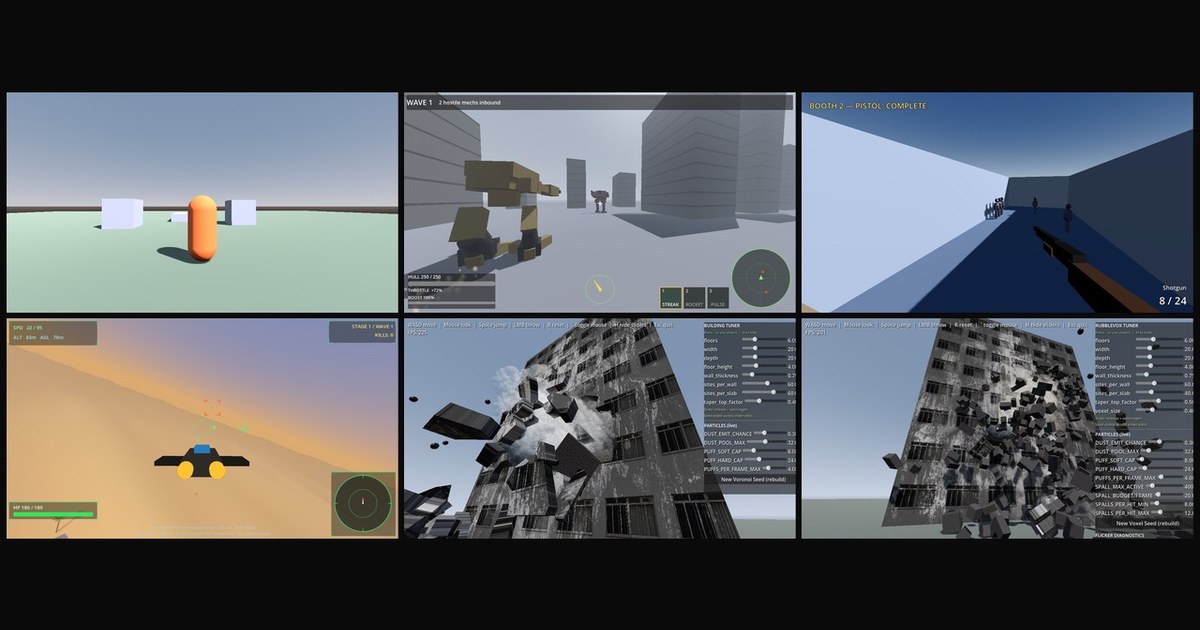
I do not even remember which one came first. I think it was Marrow. It worked on the first try, so I made another.
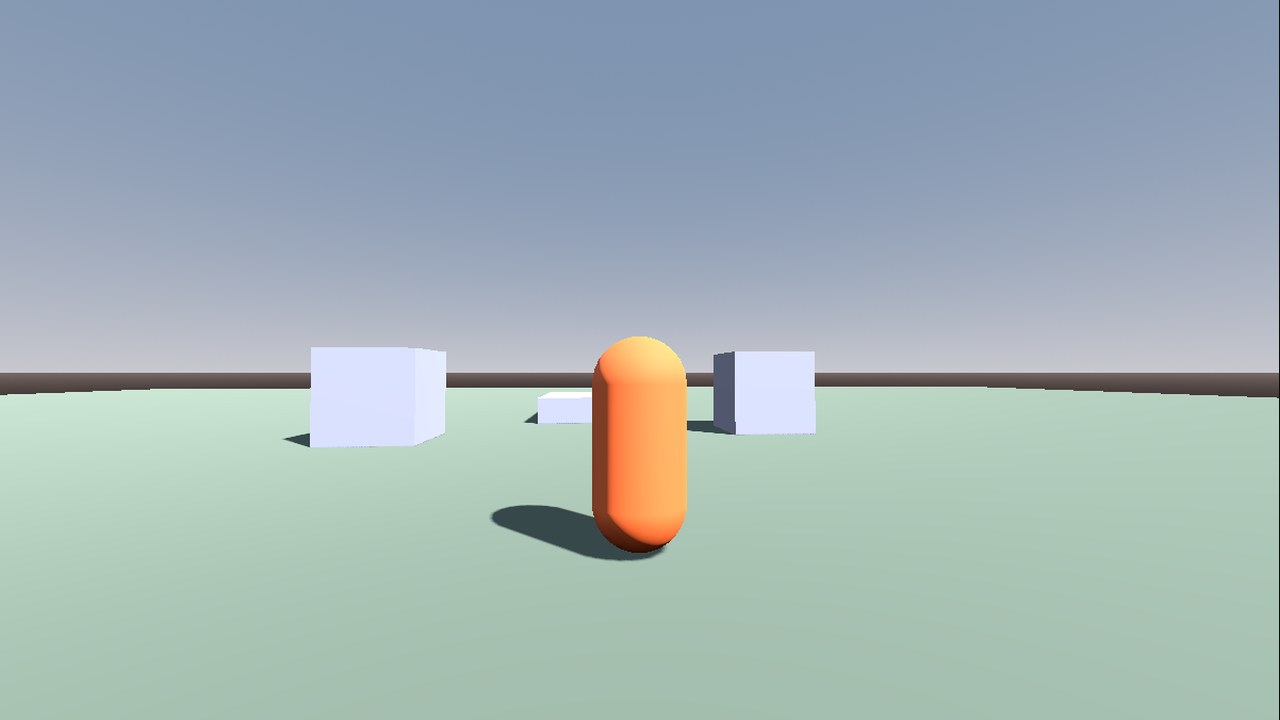
Overmass.

Then another. BDL.

Then Talon.

Then scope creep kicked the door down.
The question shifted from "can it help me" to "how far can this go".
Can this thing help build a destruction system inside Godot that feels like Battlefield or The Finals?
That question turned into Rubble.

Then RubbleVox.

I have no idea how any of these will turn out.
But they have already replaced my weekends.
Which is either very productive or a new form of self inflicted damage.
Still undecided.